Have you wondered about how online therapy works and if it is a good fit for you? This blog article will explore how online therapy works, how effective it is, pros and cons, and other important considerations.
What is online therapy, and how does it work?
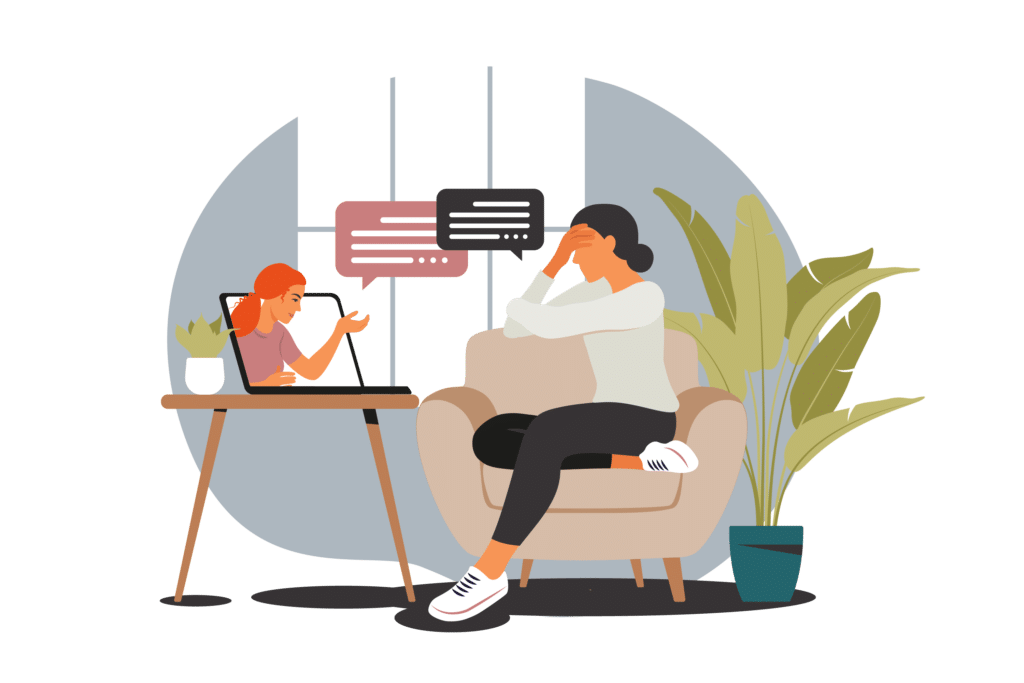
Online therapy, also known as teletherapy, is a therapeutic service typically provided via a secure video platform. Now, online therapy is one of the many options that you can choose from in realizing the best mental health care for yourself.
How effective is teletherapy?
Whether online therapy is effective for you depends on a myriad of factors. The list below can help you think through some of the pros and cons of utilizing online therapy. Pause and take time to consider whether it is right for you. Furthermore, don’t be afraid to ask a potential provider any questions that you might have.
5 pros to online therapy
- First, teletherapy provides flexibility. Understandably, online therapy allows you more flexibility to fit therapy into your schedule. You can squeeze therapy into your lunch break, in between work meetings, or while your kids are at school.
- Second, teletherapy reduces transit time and costs. This can mean more quickly doing something you enjoy or find comfort in after a session.
- Third, teletherapy provides increased privacy because you do not have to wait in a waiting room.
- Fourth, teletherapy increases access for individuals with mobility or transportation struggles.
Fifth, online therapy provides increased access to therapy specialties. Therapists may not offer the therapeutic specialty you are seeking in your area. We get many of these calls, especially looking for therapists specializing in quality eating disorder or EMDR trauma treatment.
5 cons to online therapy
- First, not everyone has a safe and private place to engage in teletherapy. Therefore, consider carefully if you have the right setting for online therapy before deciding to go that route.
- Second, teletherapy has the potential for more distractions. For instance, seeing notifications on your device or needing to navigate a pet asking for attention. Discuss with your therapist how to limit distractions so you can focus. (I’ll add – for many of our clients their pets are welcome therapeutic supports in our sessions!)
- Third, teletherapy loses access to full-body cues. For example, your leg might be shaking from anxiety, but the therapist might not see it.
- Fourth, teletherapy requires a certain comfort level in navigating technology. Take time to consider your own comfort level.
- Mostly importantly, discuss any concerns you have with your potential therapist before starting teletherapy. Cultivating Courage providers are happy to help problem solve barriers to pursuing online therapy. We’ve seen the benefits of teletherapy and the growth our clients experience is on par, if not better, than in-person services.
Four considerations for finding the best fit when you are ready to find an teletherapist:
- Training – Does your potential therapist have training in providing online therapy? What intentional structures have they put into place to provide the best online care?
- Therapeutic Relationship – Regardless of location, the therapeutic relationship that you develop with your provider is one of the most important tools in your therapy journey. Does your potential provider seem like someone you can build that with? First, identify traits that would work best for you, be clear what you need. Second, take the time to ask what their therapeutic style is.
- Confidentiality/HIPPA – Do you have a private space to engage in online therapy? Ask your provider if they use a HIPAA-compliant platform, and don’t be afraid to verify!
- Licensing Laws – Most states require that the therapist be licensed in the state where you are currently physically in, in order to provide therapy services.
Is teletherapy as good as in person?
This is a graph from an article in Forbes that depicts respondents’ experience with online therapy. Interestingly, I’d expect to see a similar graph for therapy in general.
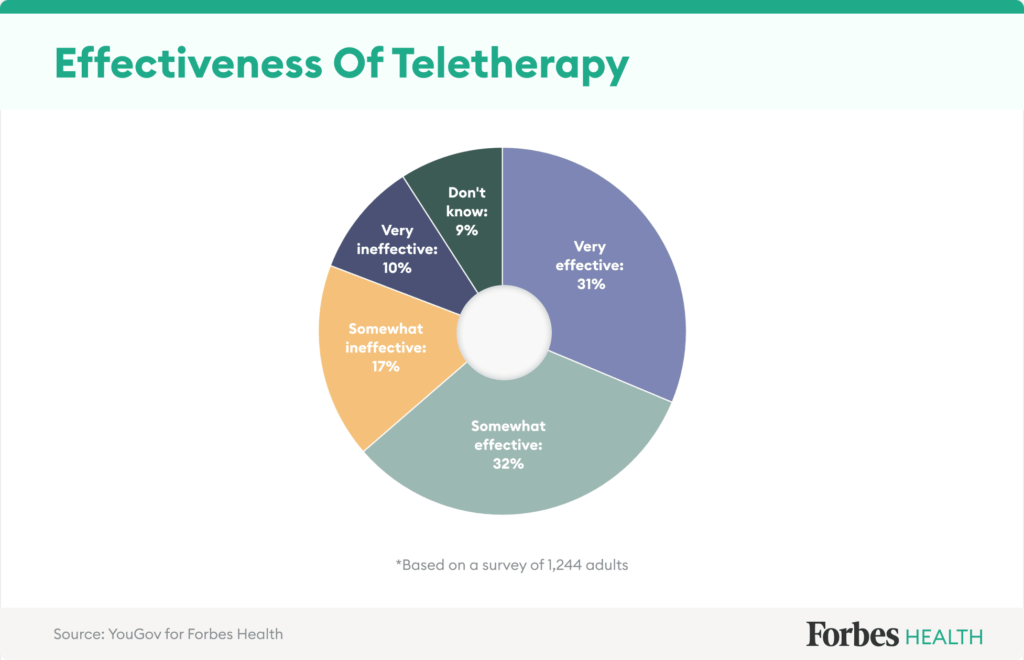
Ultimately, it comes down to your comfort with the clinician you are working with and the setting you are working in. Research has shown time and again that the therapeutic relationship is the best predictor of change. It’s important that you find the right match for you! During our consultation calls, we help any potential client to assess whether that would be online therapy is a good fit for you.
Does online therapy work for depression, anxiety, trauma, eating disorders?
There have been many studies that look at the effectiveness of online therapy for depression, anxiety, trauma, and eating disorders. Succinctly, the answer is that it is effective.
Here’s another great article that discusses this topic.
Is teletherapy confidential?
This is something that should be directly addressed with your provider. There are HIPAA-compliant platforms that provide quality, confidential video services. Remember, if you have any questions or doubts, don’t be afraid to ask.
Here are the links to the HIPPA compliant, confidential platforms we use at Cultivating Courage:
Simple Practice – our primary telehealth and EHR platform.
RemotEMDR – our specialized online EMDR platform, which enables us to provide excellent online EMDR therapy.
How much does online therapy cost?
Typically, online therapy and in-person therapy cost the same. Some companies provide low-cost online services, such as BetterHelp. Make sure whatever avenue you pick, you are screening for a therapist whom you feel comfortable with and who has the expertise for the challenges you are seeking help with.
Does insurance cover teletherapy?
Check with your insurance provider. Most insurance companies do cover online therapy. Check to see if they require specific coding from your provider. While the majority of our practice is out-of-network, we do provide superbills for out-of-network services and we can provide an email with information an insurance company may ask about our practice.
Online therapy at Cultivating Courage Psychological Services, PLLC:
Dr. Moriah O’Barr and Elizabeth Harwood, LCSW are intentional in providing expert online care. Both clinicians engage in training to utilize online care to the best of their ability. For us, we have experienced new ways to support our clients by bringing our practice online. For instance, Dr. Moriah O’Barr utilizes online therapy to provide food/meal support to her clients struggling with eating disorders. Elizabeth Harwood, LCSW utilizes a top of the line EMDR platform to provide quality EMDR trauma therapy in the comfort of her client’s homes. Check out her blog on: Can I do EMDR Therapy online?
Lastly, here is great link on how to get the most of online therapy.
Additional references:
https://pmc.ncbi.nlm.nih.gov/articles/PMC10888081/
We’re psychotherapists in Westchester. Visit our homepage.